

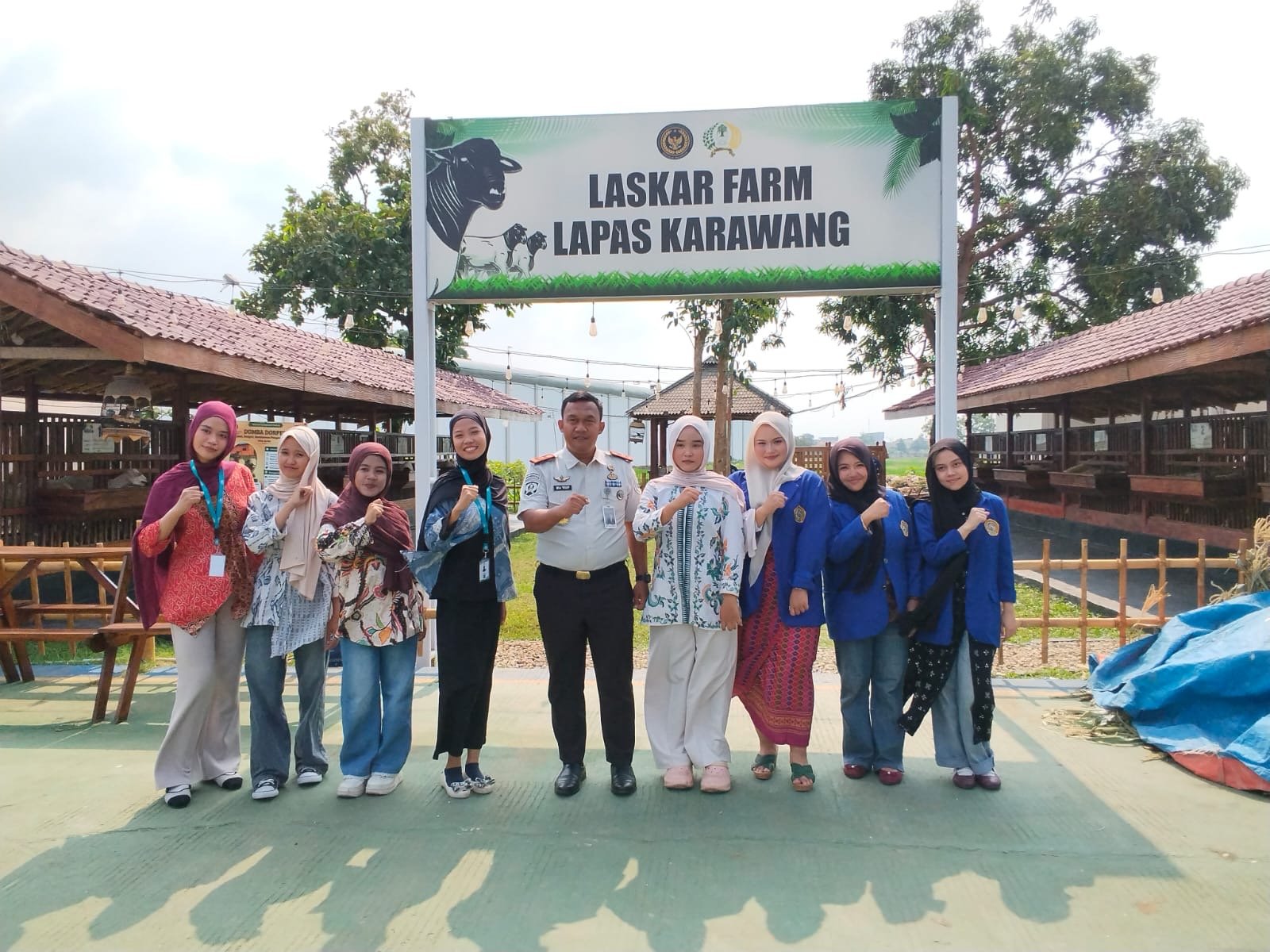

KARAWANG | TERASPASUNDAN.COM | Karawang Class IIA Correctional Facility (Lapas Kelas IIA Karawang) continues to develop self-reliance training programs for inmates through Laskar Farm, located within the facility’s Assimilation and Education Area (Sarana Asimilasi dan Edukasi/SAE).
The area is not only used as a training facility for inmates but has also been developed into a productive integrated agricultural area that combines various activities, including livestock farming, agriculture, and fisheries.
Utilizing approximately three hectares of land, Laskar Farm is organized into several layouts based on the functions and types of activities carried out in each area. This arrangement allows land that was previously not fully utilized to be transformed into an integrated agribusiness area.

Each section of the land serves a specific purpose. Some areas are used for livestock housing and animal care, while others are dedicated to agricultural and fisheries activities. This integrated concept allows various activities at Laskar Farm to operate simultaneously and support one another.
One of the main sectors developed at Laskar Farm is livestock farming. Karawang Class IIA Correctional Facility raises several types of livestock that have economic value while also serving as practical learning opportunities for inmates.
Among them are Dorper and Texel sheep, which are developed as some of the farm’s key livestock commodities. The management of these sheep focuses not only on increasing the number of animals but also on maintaining proper care and ensuring the quality of their feed.
To support the livestock’s nutritional needs, Laskar Farm also produces fermented feed, commonly known as silage. The production of this feed is part of an effort to improve feed quality while making livestock management more efficient.
In addition to sheep, Laskar Farm also raises Kampung Unggul Balitbangtan (KUB) chickens. Thousands of chickens are being raised as part of the development of the poultry sector in the area.
The KUB chicken breeding program is not solely aimed at producing livestock and food products. It also provides inmates with practical knowledge about poultry management, including animal care, feeding, maintaining cleanliness, and managing poultry operations.
Interestingly, the farm’s feed management also seeks to make use of materials that can still be utilized. The use of leftover food materials is one way of optimizing available resources and reducing unnecessary waste.
Meanwhile, another livestock program focuses on cattle fattening, including the development of Belgian Blue cattle. Inmates are involved in the daily care and management of the animals.
Through these activities, inmates gain hands-on experience in caring for livestock, maintaining the cleanliness of animal housing, providing feed, and monitoring the animals’ overall condition and health.

The development of livestock at Laskar Farm is not limited to training activities. The livestock also has economic value and can benefit the wider community.
The animals raised at the facility can be purchased for various purposes, including as sacrificial animals for Eid al-Adha. In this way, Laskar Farm not only provides benefits for inmates but also serves as an alternative source of livestock for members of the community who need them.
This concept demonstrates how correctional training programs can be developed into productive activities that provide broader benefits.
Direct involvement in livestock management also gives inmates an understanding of how a livestock business operates, from animal care and feeding to maintaining cleanliness and understanding how livestock products can generate economic value.

The approximately three-hectare area is not dedicated solely to livestock farming. Parts of the land are also utilized for agricultural and fisheries activities.
In the fisheries sector, Laskar Farm raises thousands of Nirwana tilapia as part of the integrated agribusiness concept developed within the SAE area.
In addition to fish farming, the area also includes egg-hatching activities, which form part of the broader livestock and fisheries development ecosystem.
Meanwhile, the agricultural sector utilizes the available land for various farming activities. This allows inmates to gain practical experience in agriculture, from planting crops to caring for and maintaining them.
Through the division of the land into different functional layouts, Laskar Farm is designed to allow its various sectors to operate in an integrated manner.
This concept also enables the output from one sector to support another. For example, feed management and the utilization of available resources within the area can be carried out more efficiently.
Laskar Farm is also not limited to production and inmate training activities. At certain times, the area is open to community-oriented activities.
One of these activities is a fishing event held on selected days. The event provides a different atmosphere at the SAE area, allowing members of the public to visit and enjoy recreational fishing in the designated area.
Such activities make Laskar Farm more than just a livestock and agricultural facility. It also has the potential to become a space for community interaction and education.
Visitors can observe firsthand how livestock and agricultural activities are carried out while learning more about the self-reliance training programs implemented by Karawang Class IIA Correctional Facility.
An important aspect of Laskar Farm’s development is the involvement of inmates in various activities carried out within the area.
Inmates are given opportunities to participate in productive activities as part of the facility’s training programs. They can learn about animal care, feeding, maintaining livestock housing, managing agricultural land, and caring for fish and crops.
These activities are expected to help develop positive habits such as discipline, responsibility, attentiveness, and the ability to work systematically.
Training through agriculture and livestock farming also provides practical experience, as inmates do not merely receive theoretical knowledge but are directly involved in daily activities.
These skills are expected to serve as valuable assets for inmates once they complete their sentences and return to society.
By gaining experience in livestock farming, agriculture, and fisheries, inmates can have practical skills that may later be developed into productive activities and potential sources of income after their release.
The development of Laskar Farm also contributes to efforts to support food security. Utilizing a relatively large area of land for various productive sectors gives the facility the potential to produce food while generating economic value.
The development of KUB chickens, sheep, cattle, fish, and various agricultural activities forms an integrated approach to productive land utilization.
The program also demonstrates that correctional facilities can serve broader purposes—not only as places where inmates serve their sentences, but also as spaces for skills development, rehabilitation, and empowerment.
Through sustainable management, Laskar Farm is expected to continue expanding, allowing more productive activities to be developed within the area.
The development of Laskar Farm has also attracted attention from various parties. The area has received direct visits from officials of the Directorate General of Corrections.
In addition, the livestock program developed by Karawang Class IIA Correctional Facility has received appreciation from national livestock enthusiast Irfan Hakim, who also visited the facility to observe the potential for further livestock development.
Such recognition provides additional encouragement for Karawang Prison to continue developing Laskar Farm as part of its training program and to ensure that it creates tangible benefits.
Ultimately, Laskar Farm is about more than simply raising animals or cultivating land. Behind these activities lies a rehabilitation process aimed at developing inmates’ skills, independence, and sense of responsibility.
With approximately three hectares of land divided into various functional layouts, Laskar Farm continues to develop as an integrated area combining livestock farming, agriculture, fisheries, inmate rehabilitation, and community activities.
The program is expected to continue growing and become an example of how correctional land can be utilized productively while providing inmates with valuable skills that can support their lives after returning to society.